Understanding High Blood Pressure: Causes, Symptoms & What You Can Do
Why it often has no symptoms, what raises your risk, and the everyday habits that help keep it in check.
Category: Family Medicine / Preventive Care|Reading Time: 5–6 Minutes
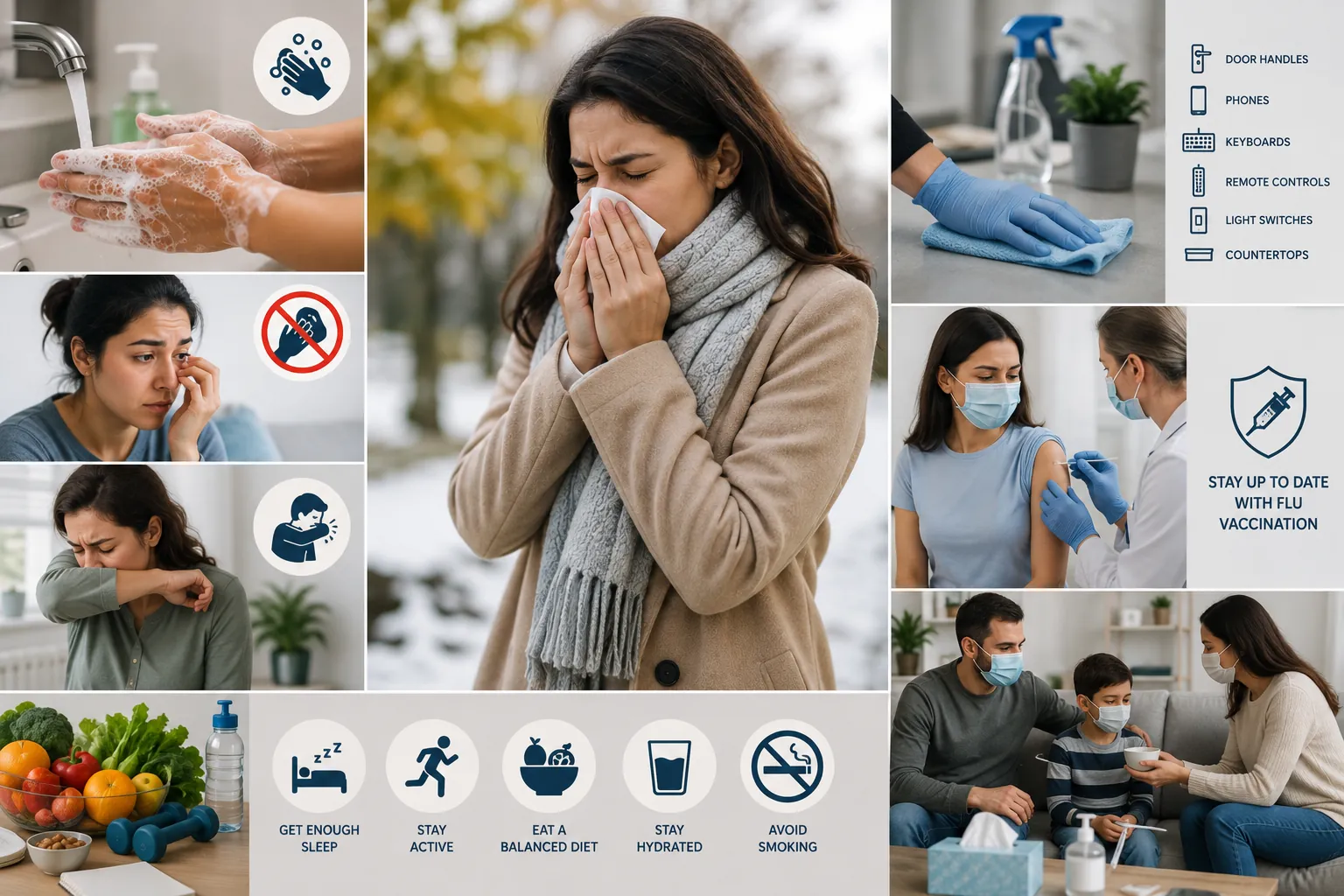
Cold and flu viruses can spread easily, especially when people spend more time together indoors. While you can't prevent every infection, simple everyday habits can reduce your exposure to germs and help protect yourself and those around you.
Good hygiene, staying up to date with recommended vaccinations, getting enough rest, and taking care of your overall health are all important parts of staying well during respiratory illness season.
Handwashing is one of the simplest ways to reduce the spread of respiratory viruses.
Wash your hands with soap and water for at least 20 seconds, particularly after coughing, sneezing, using the bathroom, eating, or caring for someone who is sick. When soap and water aren't available, an alcohol-based hand sanitizer can be useful.
Cold and flu viruses can reach your body when contaminated hands come into contact with your eyes, nose, or mouth.
Try to avoid touching your face throughout the day, particularly after being in crowded public spaces or touching commonly shared surfaces.
If you need to cough or sneeze, use a tissue or the inside of your elbow rather than your hands. Dispose of used tissues promptly and wash your hands afterward.
These simple habits can help reduce the number of germs you spread to people around you.
Germs can remain on commonly touched surfaces such as:
Regularly cleaning high-touch surfaces can help reduce opportunities for germs to spread within your home or workplace.
Your everyday habits matter, especially during cold and flu season.
Get Enough Sleep
Consistent, quality sleep supports your overall health and well-being.
Stay Active
Regular physical activity can support general health and immune function.
Eat a Balanced Diet
Choose a variety of fruits, vegetables, whole grains, and other nutrient-rich foods.
Stay Hydrated
Drinking enough fluids is important for normal body function.
Avoid Smoking
Smoking can make respiratory symptoms worse and negatively affect your health.
Annual flu vaccination is an important tool for reducing your risk of influenza and its complications. Protection from the vaccine takes time to develop, so talk with your healthcare provider about seasonal vaccination and what is appropriate for you and your family.
If someone in your household develops cold or flu symptoms, take practical steps to reduce the spread:
Most uncomplicated colds can be managed with rest and supportive care. However, contact a healthcare provider if symptoms are severe, getting worse, or you're concerned about your condition.
Seek urgent medical attention for symptoms such as difficulty breathing, chest pain or pressure, severe weakness, confusion, or other serious or rapidly worsening symptoms.
People with certain chronic conditions or other risk factors may be more vulnerable to complications and should discuss concerning symptoms with their healthcare provider.
Why it often has no symptoms, what raises your risk, and the everyday habits that help keep it in check.
The early warning signs of type 2 diabetes, who is at risk, and simple changes that support healthy blood sugar.
Common causes of back pain, the warning signs that need prompt attention, and how it is treated.
Colds and the flu can look alike. Here is how to tell them apart and when to seek care.
What a physical exam covers, why preventive visits matter, and how to prepare for your appointment.
What your cholesterol numbers mean and the lifestyle steps that help protect your heart.
How sciatic nerve pain feels, what causes it, and the symptoms that mean you should be seen.
Posture, lifting, sleep, and activity habits that help protect your back every day.
The most common flu symptoms, who is at higher risk, and when to contact a provider.
Taking simple preventive steps can help protect you and your family throughout cold and flu season. If you're feeling sick or have concerns about your symptoms, the First MD team is here to help you understand your care options.