Understanding High Blood Pressure: Causes, Symptoms & What You Can Do
Why it often has no symptoms, what raises your risk, and the everyday habits that help keep it in check.
Category: Chiropractic / Family Medicine|Reading Time: 5–6 Minutes
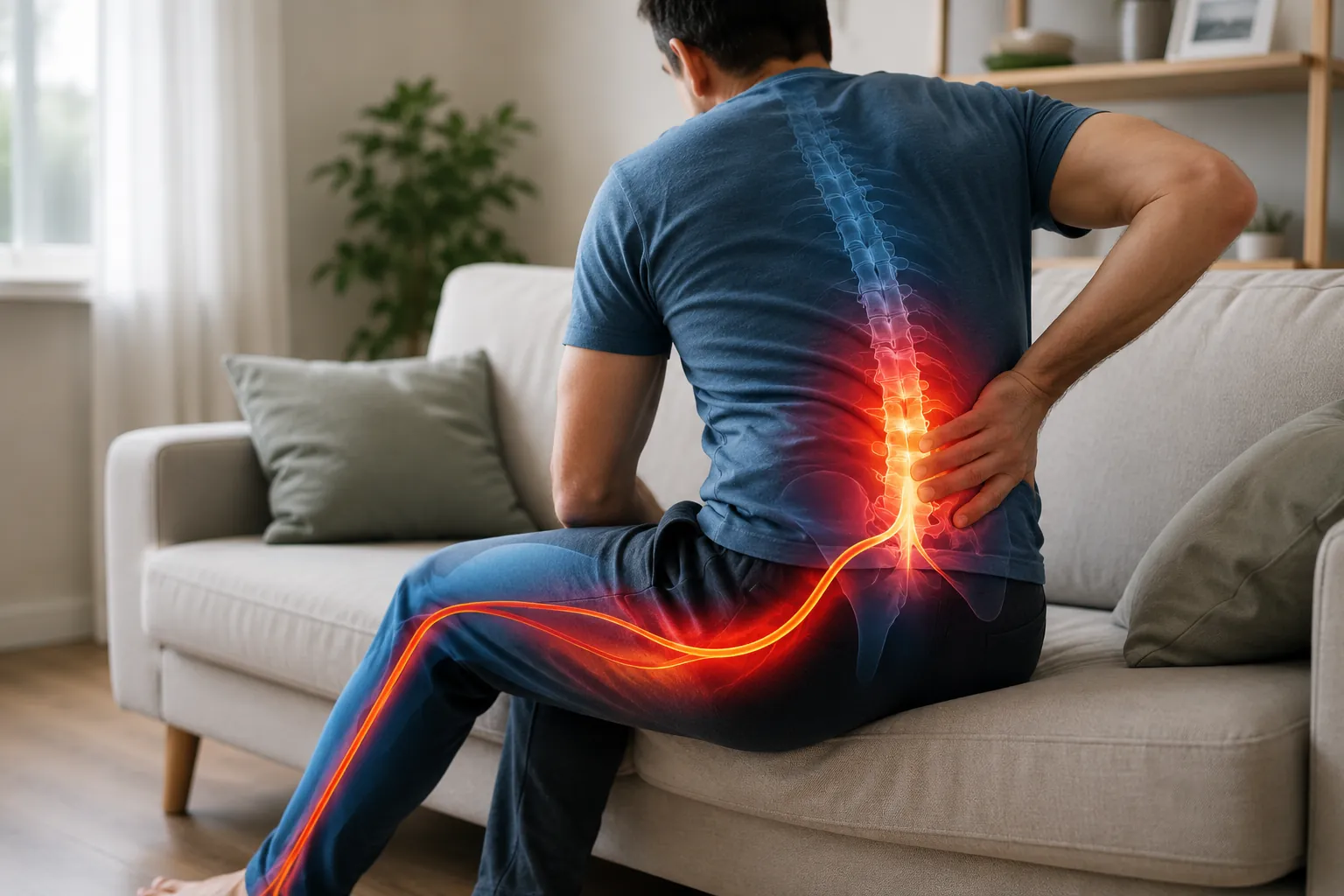
Sciatica is a type of nerve pain caused by irritation or pressure on the sciatic nerve, which runs from the lower back through the hips and down each leg. It commonly causes pain that travels from the lower back or buttock into one leg.
For many people, sciatica improves within a few weeks. However, persistent, severe, or worsening symptoms should be evaluated by a healthcare professional.
Sciatica usually occurs when something puts pressure on or irritates a nerve in the lower spine.
Common causes include:
Risk can also increase with prolonged sitting, heavy lifting, limited physical activity, excess weight, and certain health conditions.
Sciatica usually affects one side of the body and can cause symptoms ranging from mild discomfort to significant pain.
Shooting Pain
Pain may travel from the lower back or buttock down the back or side of the leg.
Tingling or Burning
Some people experience a burning, tingling, or pins-and-needles sensation.
Numbness
The affected leg or foot may feel partially numb.
Weakness
Some people experience weakness or difficulty moving the affected leg or foot.
Treatment depends on what's causing the symptoms and how severe they are. For mild cases, staying gently active and avoiding prolonged bed rest may help. Your healthcare provider may also recommend other approaches based on your condition.
Gentle Movement
Walking and appropriate stretching can help maintain mobility and reduce stiffness.
Heat or Cold
Cold or heat packs may provide temporary relief for some people.
Physical Therapy
Targeted exercises can help improve flexibility, strength, posture, and support around the spine.
Medications
Your provider may recommend appropriate pain-relieving or anti-inflammatory medication.
Chiropractic Care
Depending on the cause of your symptoms, chiropractic care may be one of several treatment options considered as part of a personalized plan.
Mild sciatica may improve on its own, but you should schedule an evaluation if your pain is severe, persistent, getting worse, or interfering with your daily activities.
Seek immediate medical attention if you experience:
These symptoms can indicate a more serious spinal or nerve problem.
Why it often has no symptoms, what raises your risk, and the everyday habits that help keep it in check.
The early warning signs of type 2 diabetes, who is at risk, and simple changes that support healthy blood sugar.
Common causes of back pain, the warning signs that need prompt attention, and how it is treated.
Colds and the flu can look alike. Here is how to tell them apart and when to seek care.
What a physical exam covers, why preventive visits matter, and how to prepare for your appointment.
What your cholesterol numbers mean and the lifestyle steps that help protect your heart.
Posture, lifting, sleep, and activity habits that help protect your back every day.
The most common flu symptoms, who is at higher risk, and when to contact a provider.
Practical hygiene, vaccination, and wellness habits to stay healthy through respiratory season.
If pain is traveling from your lower back into your leg, getting the right evaluation can help you understand what's causing it and what treatment options may be appropriate. At First MD, our team can evaluate your symptoms and help determine the next step toward better mobility and pain management.